Thursday, 29 November 2012

My Month in Books, Part One (Nov)

This month: several re-reads for pleasure and reappraisal. Some non-fiction meanderings, essays and the like, and back on-course on the avant-garde choo-choo.

1. Vladimir Nabokov — Pale Fire: A Poem in Four Cantos by John Shade

The 999-line poem ‘Pale Fire’ in Nabokov’s overpraised novel Pale Fire has never been taken seriously as a defining lyrical masterwork but more a ludic/parodic exercise in sly snark and icy affect. This enormous boxset from Gingko Press extracts the poem from the novel and presents the work in a rustic 50s style chapbook and a series of handwritten Shadean index cards. In a side panel of this black felt box (with illustrations by Jean Holabird) a second chapbook ‘Reflections’ presents two essays from Brian Boyd (Vlad biographer) and R.S. Gwynn (poet of note) who argue the case for the piece as an artistic marvel, and contextualise the affair in the shadow of Eliot and Frost and their delusions of canonical posterity. Yvor Winters (who?) is thought to have been the ‘inspiration’ for John Shade. An interesting deluxe item that, sales-wise would have benefited from including the Kinbote material, but aesthetically would have undercut the purpose. For hardcore Pale Fire or Nabokov nuts only.

2. Vladimir Nabokov — Pale Fire

Pale Fire presents a 999-line poem from murdered poet John Shade, followed by an unreliable commentary (and earlier intro) from his stalker and apparent chum Charles Kimbote. The commentator takes an arch tone to his union with shade, exaggerating and distorting his position in the poet’s life, and uses the space to expand on the history of his homeland Zembla in lieu of discussing the poem’s content. Upon a first reading I found the book something of an extended academic titterfest, albeit larded with the usual Nabokovian puzzles for militant close readers, and upon a second read, my opinion hasn’t changed much. The digressions on Zemblan kings and princes are (intentionally, but so what?) long-winded and dreary, and the line-by-line commentary, although amusing in places, doesn’t particularly dazzle except as a series of Vlad set-pieces, like a looser Pnin, albeit with more formal ingenuity. The poem isn’t supposed to be a spoof of bad poetry, according to Vlad biographer Brian Boyd in this boxset special edition. It ain’t half bad.
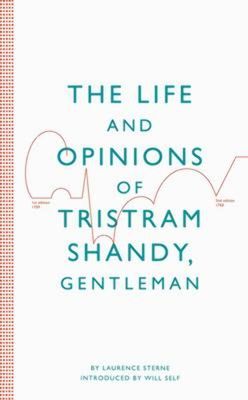
3. Laurence Sterne — The Life and Opinions of Tristram Shandy, Gentleman

This edition from Visual Editions expands upon, or at least emphasises, the typographical fancies Sterne deployed for his maddening nine-book digressive epic. Combining black and red font effects (all the dashes and chapter titles are in red), with unique artistic stunts (the infamous black page is replaced by a strikethrough design, various font frolics are exaggerated in amusing ways, and one page includes a ‘moisture’ effect using semi-laminate bubbles over the text), the book isn’t perhaps as radical as it appears, but it mainlines some creativity into otherwise bland Penguin or OUP editions. Other effects include Slawkenbergius’s tale printed on a parchment-like gray background (in red font!), a folded page which has to be ‘closed’ to read the text on the other side, and an enhancement of Sterne’s barmy plotline squiggles that attempt to map a coherent path for the book. The edition is lacking in explanatory notes, meaning a new reader interested in keeping up with the Latin, Greek and French asides, or the avalanche of obscure references that come thicker and faster as the book—um, progresses?—digresses, will need to have a Penguin or OUP edition handy. (I read this constantly flipping back to the OUP ed for notes—eventually I gave up). Tristram Shandy, as you will discover, may be a book of digressions and wild goose chases, but it demands Zen-like concentration for both the scholasticism and the difficult 18thC English. I hope to prove a better reader on the second spin. Michael Winterbottom made the film with Steve Coogan.

4. Charles Dickens — The Mystery of Edwin Drood

An incomplete Dickens novel is like a half-finished jigsaw. How do you rate a half-finished jigsaw? This fragment, being Dickens, actually comprises about 1.5/3 of the intended work, but still isn’t enough to want to invest oneself emotionally and intellectually in the characters and plot happenings (for me, anyway). In this instance, it may be wiser to skip the book and head straight for the recent BBC adaptation (much as it pains me to recommend TV over text). Still: not without its usual charms and flourishes, howevs. Now I have reached the end of my serialised Dickens quest, let me now pointlessly rate the works from favourite to not:

1—
Little Dorrit. Sumptuous, heartbreaking . . . not an unmemorable moment.
2—Our Mutual Friend. Melancholy, dark, haunting and murderous.
3—David Copperfield. The reason first-person narratives are no longer required.
4—Nicholas Nickleby. Extremely funny, rollicking picaresque-esque number.
5—A Tale of Two Cities. Exceptionally moving and bloodthirsty historical novel.
6—Oliver Twist. Captivating child protagonist, fabulously vicious twists.
7—The Pickwick Papers. Dickens does straight comedy to much merriment.
8—The Old Curiosity Shop. Scariest villain and cutest child fatality.
9—Bleak House. Complex, powerful and yes, a wee bit overlong in places(!)
10—Martin Chuzzlewit. His second best comedy, starring the brilliant Pecksniff.
11—Dombey and Son. Extremely tense, extremely meandering. But good.
12—Barnaby Rudge. Satire and history together in a messy, bloody epic, with parrots.
13—Great Expectations. Beautiful childhood reflections, less successful in adulthood.
14—Hard Times. Sublime character Gradgrind in choppy, hectoring effort.
15—The Mystery of Edwin Drood. Unfinished.

5. David David Katzman — A Greater Monster

A Greater Monster is an audacious, ambitious antinovel that takes the form (at a guess) of a continuous hallucinatory trip through the depths of the imagination. The unities of time are doused with fourteen pints of lexical petroleum. Linearity, plot logic and coherence are torched on the bonfire in favour of language that uses typographical innovation to mimic the helter-skelter loopiness of the unconscious. Language doesn’t escape the sousing—here, wordplay is permitted a little pas de deux before Katzman violently beats his words around the cursives with sticks. Starting in the past then switching into the future tense, the novel puts all its faith in the rhythmical wave of words: sentences are clipped and speedy, frantic and free. The image-driven and action-led surrealism is unrelenting and will test or polarise the readership.

To what extent the typographical stunts are entirely relevant to the Greater Aesthetic Purpose, or exist merely in and of themselves, is up for debate. But the range of artful deviations on here is delightful: snaking and spiralling sentences, first person pronouns exploding in your face, hands and busts reaching out the page, all sorts of kerning and spacing shenanigans, plus, most impressively, 75pp of beautiful black-paper illustrations. Katzman’s commitment to the book as both an evolver of language and a work of visual art shines through. Although
A Greater Monster (it seems) wants to be read linearly, it opens itself to random reading and the reader’s immersion in the delicious word-waves. Perfect for those seeking their next blast of brain-stretching oddness and loving wordbendery.

6. Gilbert Sorrentino — Little Casino

A short spectacular novel that forms part of an unofficial trilogy along with A Strange Commonplace and the posthumous The Abyss of Human Illusion we might label the “retirement” trilogy (GS having previously, and quietly, taught at Stanford until the late nineties). In a series of vignettes, Sorrentino dredges up the ghosts of his Brooklyn past for a typically sardonic, extra-specially perverse cockeyed slant at humanity and its failings. A warm-hearted and sometimes sentimental book, Little Casino is comfy in its artifice, with self-commentaries added to each chapter for further cranky or equally moving comments. Among the more amusing pieces is ‘Epistolary Associates’ where a woman criticises a letter sent by an ex-lover for not jolting her “into taking a fresh view of our relationship . . . your recollection of what we ‘had’ together seems, I’m afraid, rather flat.” The chapter concerning a vicious marital argument ‘The Tomato Episode’ is especially amusing when read by Sorrentino in this interview and podcast from the Lannan Foundation (sadly not filmed). The only video footage available of Sorrentino, seemingly, is him discussing Hubert Selby in the DVD It/ll Be Better Tomorrow.

7. Gilbert Sorrentino — Aberration of Starlight

Sorrentino’s sixth work of fiction plants an unexpected but apt quotation from Brian O’Nolan after the final page: “The meanest bloody thing in hell made this world.”

Aberration of Starlight
is one of Sorrentino’s most bitter, scathing and unflinching novels (and perhaps the closest he came to ‘realism’ in content only) in his hefty canon. Split between four characters—a son, his mother, her lover and a father—the book probes into the “psychopathology of everyday life” (Freud ref but also a short story by Gilb) with a series of structural scalpels and stylistic callipers. Making use of letters, fantasies, internal monologue, question-and-answer, dialogue and memory fragments (all this is on the blurb—don’t panic), Gilb summons up the burning contempt, sexual repression and overall heartbreak at the heart of this painfully “real family.” Billy, the “cockeyed” child, hopes that Tom, her mother’s philandering lover, will replace his absent father, while their poisonous old prick of a grandfather can’t stand to imagine his daughter as a sexual being or having his virility challenged by a younger man. The story is beautiful, painful, darkly humorous and melancholy. And tough, damn tough:

“He wasn’t prepared for her anger and spunk in talking back to him, and what did Bridget being sick all that time have to do with her letting this man be her escort, he’d like to know that, and could she tell him that? With a pair of high-heeled shoes meant for a girl of eighteen, not a mother who’d been married in the church at a high nuptial mass and in the eyes of God was
still married. She sailed right by that and tore into Helga, that backbiting dutchie she called her, can’t you see what’s as plain as the nose on your face? That sauerkraut-eater has, oh don’t deny it, she has grand plans for you, oh my, grand. Why, you talk about people, pardon me, the antiques here, think about Tom and me, Jesus, Mary and Joseph! Don’t you think they can all see that woman setting her cap for you? And she’d say anything to play up to you, anything she thinks you want to hear, by God, she’ll say it, in spades. He didn’t mean to—maybe he didn’t actually say it—but he forebade her to go out with that sly article and her face got as white as her shoes. She said she’d do as she damn well pleased! With a bleached blonde of a tramp he was seen, a whore! he said, and blushed. That’s the kind of man who’s taking you dancing! Worse than that greaseball of a husband of yours, and bejesus he doesn’t even have a bit of ass on him! By God, it’s one of the wonders of the world that the man can manage to sit down. She was holding the door open for him and wiping tears from her eyes. Oh Poppa, she said, what a spiteful thing to say, what a spiteful, mean thing to say to your own daughter.” (p192-3)

8. Hubert Selby Jr. — The Demon

The seventies were seemingly the most productive decade for Hubert Selby, whose short bibliography shows how torturously he composed his tortured (but never torturous) novels and stories. The Room was published in 1971, followed by The Demon in 1976 and Requiem For a Dream only two years(!) later. With his two masterpieces behind him—Requiem and Last Exit to Brooklyn (1964)—Selby’s work was extremely sporadic and, apparently, subpar. Publication dates suggest this novel occupied him for half a decade, despite Requiem being the superior work, but it’s by no means a patchy effort. The Demon is a “psychological drama” (as TV schedulers say) following the progress of sex-addicted Harry from his womanising years, his attempt to shimmy up the (unconvincing) corporate ladder, to his slow transformation into a serial killer. The prose is typically simple, using Selby’s familiar punctuation style and exhausting run-on sentences. He spends a little too long on the build-up for the climax to have the same devastating wrecking-ball-in-the-guts feeling as his two masterpieces. Arguably, Selby’s depiction of home life is far too cardboard to be wholly satisfying here. His strength as a writer was a profound understanding of what drives people to extremes and the tormented tangles we get ourselves into. (It is hinted that Harry could ‘free’ his demon by simply confessing all his nefarious acts—hmm, probably not, eh Hube?)

9. Flann O’Brien — Further Cutting From Cruiskeen Lawn

The Best of Myles is the only Myles na gCopaleen collection needed in one’s personal library, end of discussion, rubber-stamp it, commit it to posterity, do it and dust it. This edition and its non-Dalkey partner The Hair of the Dogma mop up morsels from the Cruiskeen Lawn columns that might be of some interest to the reader jonesing for historical Irish trivia or who can’t get enough of Myles’s hilarious but eventually tiresomely wacky voice. I can imagine how exciting flicking through The Irish Times and arriving at Myles’s column would have been circa 1940-1966—here, the effect is diluted through a surfeit of out-of-date material on Irish politics, topical debates and other parochial concerns or esoteric oddities. In other words, all the best material is in The Best of Myles. Clue’s in the name.

Sunday, 18 November 2012

A Sodding Update


Since graduating from the Napier MA (over a year ago now and STILL banging on about it!) I haven’t felt the need to maintain much of an online blog presence. Most of my online activities take place on Goodreads where I discuss what matters most to me—literature. Or, if you like, books. Discuss might not be the word. I write brief capsule reviews of the books I read and ten or so people ‘like’ my reviews without comment. If I feel like it, I leave inane comments on other people’s reviews. Still, I like it there.

My book group still meets on weekends, and the Ulysses meetup was extremely useful and laid-back. I sometimes feel inadequate as to how I dissect a text. I have strong urges to write extremely analytical closely-read essays on the books I read, but that would take up too much of my time, and who would care? I could spend over a fortnight writing one of those, all for the satisfaction of having autopsied the book so I briefly have “complete mastery” over it, only to forget the drivel I wrote in a few weeks. I did this for a spell between 2004-2007 with albums and made £300 on a reviewing site. Goodreads pays nada.

The best-friends-for-life writing-network-of-Napier-alumni thing hasn’t happened. Perhaps I was too naïve to assume people would want to start a collective for sharing and editing each other’s work with frequent meet-ups and so on . . . people do things, so I am told, in their lives, that make these things impossible. I did set up a semi-useful FB group which has already been forgotten about. My suspicion is people find publishers for their own work and forget to share, or think fuck it—I want to have the edge and don’t share on purpose. Does that sound embittered and envious of me? Possibly. I’m one of the few people who truffles for publishers and anthologies and then shares. I think people, especially writers, are inherently selfish and perhaps need to be to survive in this fucking horrible world. I don’t like it, but how many writers, upon winning a contest, will punch the air and say, in your face suckers! All of them? Writing is as predatory as any other business.

At the moment, I’m not writing with a commercial eye, I’m focusing on writing what I want to write. Arlene’s Atoms is, possibly, the closest to a mainstream thing I will produce. I recently sent the book, fatalistically, to a slew of small presses, skipping the big hitters. Realistically, if I have a small-press book, or maybe two or three in time, behind me, I will have more chance of being glanced at by the big fellas. So my hope is that one of the many fine small presses will pick it up. If they don’t, I will need to take up mainlining heroin into my knees. I think we were taught to be too ambitious at the Napier MA. Although the crushing futility of the endeavour of writing was repeatedly emphasised by David Bishop, I think I shouldn’t have been advised to sub to agents. It was a waste of time—I’m an unknown with no prizes under my belt. But what does that matter now?

I have a new novella on the go at the moment: the form and structure and content are cohering nicely. I write fairly quickly once these things are in place, so hopefully this will be finished early next year.

Sunday, 11 November 2012

Letter to the Agent


Dear _____

I sent you my novel Sally’s Testament last month and received a complaint about the opening sentence: “Cities at night, I feel, contain men who cry in their sleep and then say Nothing.” Your complaint was that this sentence is the opening of Martin Amis’s 1995 novel, The Information. I would like to explain. My use of this sentence dates back to 1994 when my novel was originally a short story, ‘Cherries in Bloom.’ It appeared in New Fiction 8 in modified form: “Cherries at night, I believe, contain pips who cry in their sleep and then say Eat me!” When it came to composing my novel in 2010 I adapted portions of the above sentence for my own use, oblivious to this chance occurrence of the same line in Amis’s novel. I hope this clears up any error and you will reconsider my MS.

Yours obligingly,

Alice McCulloch

Tuesday, 30 October 2012

My Month in Books (Oct)

This month was devoted mainly to Dickens completion and re-reads of Gogol, Sorrentino, Nabokov, Ellison and Burgess.


1. Jonathan Franzen — How To Be Alone

Franzen hits the target when literature is being discussed. The career-making accidental cri de coeur ‘Why Bother?’ and ‘The Reader in Exile’ and the Gaddis love-in-cum-demolition ‘Mr. Difficult’ are all sublime pieces, if a little uncertain. The more reflective, personal essays show Franzen’s likeable man-on-the-street intellectualism, especially the Alzheimer’s piece ‘My Father’s Brain’ and the hilarious Oprah-era insight ‘Meet Me in St. Louis.’ He is less successful when broadsheet feature writing. ‘Lost in the Mail’ and ‘Control Units’ are niche articles written in a by-the-numbers journalistic style, with only a few flashes of insight. When it comes to presenting a non-personal alien experience, Franzen is no Foster Wallace. On the whole, a solid compilation of honest and entertaining (if unmemorable) non-fic licks.

2. Charles Dickens — A Tale of Two Cities

Chris Sarandon saved me. His excellent performance as Sydney and Charles in this respectable 1980s TV adaptation helped me over the hump of a confused first attempt to engage with this splendid tale. Despite forever entwining Sydney to Nick Cave in my imagination (a bad thing?) Chris played the two heroes with plank-like charisma and bouffant hair. The novel itself is a quiet epic—for all the tumult, uprising and bloodshed, this a story of personal sacrifice and silent, sorrowful heartbreak. An exquisitely weaved narrative, hewn with rare Dickensian restraint and more quotable lines than at a blurb writers’ convention. Masterpieceish. [Madame Defarge has been reincarnated as Anne Robinson. If she could introduce a guillotining element to The Weakest Link, she would. One head per wink. She’d love that].

3. Charles Dickens — Great Expectations

It is frustrating being slapped around the head by classics that leave you trouserless in a lukewarm puddle. Because the failure, as Mr. Gass points out, is never with the book. You are to blame, always. I am to blame for not embracing Great Expectations with the same open-armed ever-lovingness with which I embraced Little Dorrit and David Copperfield and so on down the line. My reasons, thus: the second act loses the momentum and powerful perspective established in Part One, as Pip becomes a priggish late teen and the manoeuvrings of the cast of characters replaces the exacting and beautiful childhood reflections. The story doesn’t bounce, build or blow up for me. The plotlines hinge on a series of not-that-interesting revelations about Pip and Estella’s parentage. The characters (Joe excluded) don’t have that heaviness, that heart-crushing quality about them—instead, an all-purpose grimness pervades the novel, lending it a faux-gothic tone that doesn’t transform into swinging emotional lurches and surges. Also, Pip’s narration isn’t as interesting as an omniscient Dickens third-person panorama. Pip, as a writer, is a dull bugger. For me. Remember, I am at fault, always.

4. Zadie Smith — NW

This is the novel I hoped Zadie would write. Since On Beauty in 2006, she’s been brushing up on the post-Eggers American hipster canon, hanging with the Brooklyn crowd, writing dissertations on DFW. This structurally inventive, stylistically diverse and playful novel should have set my eyes aflame with love for the precocious stripling who wrote those three unwieldy social satires in her early-to-late twenties. But it didn’t. Divided into a series of cryptic sections with titles like ‘visitation’ and ‘crossing’ and ‘host’ that stink of French theory, and making use of rangy chapter-chopping devices (short numerical chapters improperly ordered, chapters arranged by locational specificity) with varying typographical quirks (en dashes for dialogue, then no en dashes, long v. short paragraphs, mixing up the narration with reported thought and dialogue) . . . I SHOULD F**KING LOVE THIS. But I didn’t. So what happened? Would it be reductive of me to say, and pardon this sense-lapse, I didn’t “like” the story? Or, and hang on to your hats, I didn’t “like” the characters? I respect the carefully observed micro-analysis of the four lives depicted here, but the style seemed to work contra to deepening our empathy for these inexcusably ordinary Londoners and their scrambled lives, and the passing-of-time-leaves-empty-lives-waiting-to-be-filled vibe that was working to provide the novel with a through-line of profundity seemed a little pedestrian. I should add an extra star for Zadie’s successful navigation around a wholly new fictional terrain and reupholstering (uphipstering?) her style, it’s livelier and fresher than it ever was. And I should have loved it. But I didn’t.

5. Louis Ferdinand-Céline — Journey to the End of the Night

A full-on misanthropic epic, like if E.M. Cioran met Thom Yorke for a fly pie in a Nigerian slum. Céline is a deliberately choppy, lawless stylist, Dostoevskian in his fondness for the nerve-racked ellipsis and the hysterical exclamation point (tics that would characterise his later, practically unreadable, work). Bardamu is the Céline stand-in whose detached cruelty acts as a necessary galvaniser for his adventures in WWI, French-occupied African hinterlands and a stint in a freshly industrialised American scream. His ranting adventures run on a manic, darkly comic energy, a teeth-clenching horror, a rubberneck’s glee at such innate human beastliness, and genuinely momentous plot shapes and shifts. Overlong and falling short of enduring classic status. But wild. Tortuously human. A writer to be experienced at least once—this is, no doubt, the best place.

6. Nikolai Gogol — The Collected Tales

First: this is not The Complete Tales. The unlearned distinction between Collected & Complete has angered completists the world over. Collected means incomplete: a mixtape of works that constitute, critically, the best this writer has to offer. Complete means the totted-up totality, depending upon what is being completed, i.e. Complete Works is ambiguous and open to omissions, depending on what is classed as a work—prose? plays? Just assume a fuller completion when it’s Complete, not Collected. Except in those rare moments when Collected means Complete. In the case of Gogol, Yale U Press have the one Complete Tales in print, in two volumes, incorrect lumped with the Collected Tales eds. This beautiful Everyman’s hardcover edition (and, presumably, the paperback equivs) omit a slab of material from Evenings on a Farm Near Dikanka, which only exists as an old Oxford paperback conflated with Mirgorod stories, suggesting the work is so lacklustre it doesn’t bear reprinting.

For the sake of tedious exactitude, this edition omits all the story fragments, and, from Evenings: The Fair at Sorochintsï, May Night or the Drowned Maiden, The Lost Letter, A Bewitched Place. From Mirgorod, Taras Bulba is omitted (available as a separate book from the Modern Library). These tales, presumably, are found in Yale’s Complete Tales. The tales in this Collected Tales perform the Gogol mixtape function perfectly, from the rambling horror of Viy and The Night Before Christmas to the hilarious sinister satire of The Nose and The Overcoat. Not all the tales spark and sizzle, like the slight St. John’s Eve and Old World Landowners, but the best of these, the bestest, are, at their bestestest, some of the premier examples of the Russian short story: chilling and macabre, thigh-splitting and mad.

7. Anthony Burgess — A Clockwork Orange

A favourite of my late teens, still a favourite now. The brutality of male blooming and the private patois of our teenhood . . . splattered across this brilliant moral satire, abundant in vibrant, bursting language and a structural perfection: Shakespearean, dammit. Goddamn Shakespearean! nadsat is second only to the language in Riddley Walker for a perfectly rendered invented language that is consistent within the novel’s own internal logic. This book is musical! This book sings, swings, cries and rages! Oh this book, this book! My first encounter with unbridled creativity, intelligence, elegance, thematic unity, this book made me weep for the future of poor sadistic Alex. Oh, he must grow up, he must! But he doesn’t Oh Humble Skimmer, he doesn’t! His nadsat is in place up until his story ends, and all that cal, so Alex remains a perpetual teen, like the boring little shit in Salinger’s unambitious literary haemorrhage (I forget the title). This book, this book! Oh my droogies, oh my Bog . . . nothing hurts so much on your stomachs and your heads and your hearts as this book . . . except maybe having Earthly Powers dropped on your tootsies . . . !!! [collapse into gibberish] !!!

8. Vladimir Nabokov — Pnin

I read Pnin in 2009 but reread the book today to decide whether my love merited buying an Everyman’s hardcover edition. Verdict? No. I’ll stick with Lolita in Everyman’s and, after a reread, possibly Pale Fire. Pnin is lighter, but by no means lexically less impressive, than Lolita and has more in common with the high-class comedies Pictures From an Institution or Lucky Jim than earlier, more cunning Nabokovs (the unreliable narrator twist isn’t as ingenious as Manny makes it sound). Updike’s Bech books seem to take this as their role model too, except in those books the arch asshole narrators are supposed to be lovingly embraced by the readers. Despite Nabokov’s claims to this work as a rounded novel, it feels sketchy, it feels like episodes in a classy HBO number. It is a novel, why can’t it be, but its insides feel all loose and stringy. Still. A laudable upper-minor work.

9. Ralph Ellison — Invisible Man

A powerful, energetic tour de force: timeless, breathtaking, politically ablaze, tremendously comic. I only have one more thing to say: Read this. Read this. Read this. Read this. Read this. Read this. Read this. Read this. Read this. Read this. Read this. Read this. Read this. Read this. Read this. Read this. Read this. Read this. Read this. Read this. Read this. Read this. Read this. Read this. Read this. Read this. Read this. Read this. Read this. Read this. Please.

10. Gilbert Sorrentino — Red the Fiend

The thing about Gilbert Sorrentino is that he is, only occasionally, a metafictional pioneer and postmodern innovator. Half the time he wrote books like Red the Fiend which, although conceived in his usual book-as-useless-artefact style, is a work of bloody-minded breakneck realism, spliced with a world-weary comedy and an ever-present tenderness. Tenderness came to define Sorrentino’s later work, especially in the beautiful and haunting memory novels Little Casino and A Strange Commonplace—both rich in spectres at once tragic and screamingly funny. Sorrentino, perhaps more than anyone, understands the precarious, perhaps nonexistent line between comedy and tragedy. Split into forty-nine chapters, Sorrentino’s glib narrator coolly describes life among a dysfunctional Brooklyn family, focusing on only-son Red and his sadistic Grandma, a superb Dickensian villain of (somewhat) exaggerated Irish-Catholic cruelty, where any minor violation of proper behaviour results in Red being ladled, whipped, bashed and clobbered. There is no Dickensian moral equilibrium for Red in this novel. He’s trapped in a Depression-era reality—all he can do his endure his pain and steal occasional looks up his teachers’ skirts. As Sorrentino said, Art cannot save anybody from anything. It certainly won’t help poor Red here. Red the Fiend is a heartbreaking and blackly comic book, and also doubles up as an effective satire of those Dave Pelzer-inspired, Please Daddy No books clogging up British airports.

11. Charles Dickens — Our Mutual Friend

Better to read Dickens in week-long rushes—serialised readers, without the aid of Wiki or plot recaps, will have to summon the heroic powers of recall commonly the resource of Victorian bookworms. How torturous to be put on tenterhooks for months as to John Rokesmith’s identity enigma, to think of the vagabond Wegg ruining the sweet old Mr Boffin. Perhaps now, at the end of my Monster Dickens reading, it is pertinent to ask of these novels—page-turners of their day, morally instructional entertainment, or works of art? Answer: all three and more. These are omninovels that defy snubbing. In his last completed work before a long novel-wards sabbatical, Dickens once more chips away at an old theme: the corruption of money, how it seeps into society, and poisons everything. Not that Chaz was a raging anticapitalist, quite the opposite, but there’s no point in being a millionaire if you behave like a spoilt child hoarding all the sweets. In an age badly in need of strong moral fiction (hurts me to say, but tis true), this message still needs to be drilled into the heads of the moneyspinners of the free world. Our Mutual Friend is a brilliant (complete) swansong from Chaz, full of collectively captivating plots and subplots, and some more complex personnel than usual (Wrayburn and Headstone) and your usual vivid, striking and compassionate prose mastery. Farewell, big Chaz!

12. Javier Marías — Written Lives

My alternative to pumpkin soup and pop-culture clichés on this, The Halloweenshire of Hollowness. Bitesize essays on a limousine of luminaries, plus some titbits on unknown promiscuous darlings of the demimonde. The final essay, ‘Perfect Artists’ is an illuminating gloss on famous author portraits. Marías plucks out the pertinent data and serves his musings in a coulis of wit and irony. A charming ickle stocking filler for the literate pater in your life. See Mike’s review for some scrumptious selections. Published in the Brattish Isles by Canongate, who sometimes sprout a set of balls and print something original.

Next month: Steven Moore’s encyclopedic Alternative History of the Novel, Vol. 1.

Tuesday, 16 October 2012

Haggis-Waggling McKiltism


Oftentimes I ask myself the question: how important to me is my Scottishness? Usually, my knee-jock reaction is to dismiss my nationality as irrelevant to my writing. I dislike contemporary Scottish novels that make a song and dance about their rampant McKiltism with exaggerated dialect or extremely specific place-dropping or characters that are overly Scottish, to the point I want authors to repress their personnel’s Scottishness so they appear more universal and less like haggis-waggling novelties.

I tend to set my fiction in Scotland since I live here, that’s all. Apart from an embarrassing attempt at dialect in the first draft of my latest novel Arlene’s Atoms,  my characters speak plain English (with minimal Scots vocal tics to denote accents) and inhabit Scottish cities. The strongest Scots trait I demonstrate is the impulse to ridicule, esp. ridiculing one’s place of residence if it isn’t in a plush conurb in Burgh or Glasgow. In Arlene’s Atoms, my depiction of Cumbernauld as a small town ruled by ruthless gossips is a satire of the mentality (though Cumbernauld isn’t that small) that little places are horrible, uncultured drug-dumps for workshy illiterates. The place I was raised, Armadale, was touted thus by everyone who stayed there, to my childwide bemusement.

So is place inexplicably linked to identity? Probably. But it shouldn’t consume one’s identity.

Wednesday, 10 October 2012

A Postmodern Belch Released

My first fully furbished novel, A Postmodern Belch, was slated for publication in 2010 at Goldfish Press. Due to an overwhelming outcry of despair from interns and meddling writers wanting their own books published, unforeseen car accidents and traitorous editors, the book never got printed by this small Californian boutique press. Years later, my enthusiasm for this super-silly, overindulgent work of youthful exuberance has not diminished, so I have decided to self-publish the novel via Lulu. It’s available via that fine crankshaft for the pocket-scorching fee of £7.06 + P&P. Here is an interview with myself, pertaining to:

Interview with The Author

MJ: You are The Author of this undergraduate folly, correct?
MJ: I am.
MJ: What did you hope to gain by self-publishing a no-holds-barred tricksy embarrassment like this?
MJ: Love and acclaim.
MJ: Ha!
MJ: Just kidding. I hoped to free myself from the self-conscious novel. From the tiresome limitations of self-reference.
MJ: Did you succeed?
MJ: Once you let doubt and awareness creep in you’re never free.
MJ: Tell us about the novel.
MJ: Three characters, Harold (based on me), Lydia (based on the woman I would like to be), and Greg (based on boring normals) wrestle for control of the novel, A Postmodern Belch.
MJ: Is that it? For 367pp?
MJ: Yep.
MJ: Uh . . . .
MJ: There are different fonts! Larger fonts! Footnotes! Sometimes fonts fluctuate in size mid-sentence.
MJ: God, you are so crazy. Such a fucking innovator.
MJ: This is turning into self-abuse now.
MJ: So?
MJ: A Postmodern Belch is all about self-abuse. It’s about being locked in a mind so paralysed by the reality of the self (don’t snigger) that it cannot tame its characters, cannot escape the solipsistic hells of the hyper self-aware long enough to create a decent story.
MJ: Who needs a decent story?
MJ: Exactly.
MJ: Who needs characters, plots, emotional sustenance, depth and intelligent discourse?
MJ: Exactly.
MJ: When you can have three unpleasant bastards shouting at each other for 367pp about how much they hate being products of the M.J. Nicholls imagination and fonts that expand mid-clause and crazy kerning and childish swear words every four lines in place of actual substance, thought, creativity, excitement, humour, energy or meaning?
MJ: Exactly.
MJ: You have written the least readable book in the galaxy.
MJ: I hope so.
MJ: Who will read it?
MJ: The self-loathing. People who hate me.
MJ: That’s your audience?
MJ: Works for Martin Amis.
MJ: Thank me for my time.
MJ: Thank you. Me.

One can acquire A Postmodern Belch here.

Next Big Thing Chain Post

Tagged by Alison Summers

What is the working title of your book?

Arlene’s Atoms.

Where did the idea come from for the book?

Hard to pinpoint. I started with the surreal conceit of the protagonist birthing a series of unusual objects—a car, a cow, etc. I tend to use strange images as a springboard for fiction.

What genre does your book fall under?

Magic realism. Surreal comedy.

Which actors would you choose to play your characters in a movie rendition?

Shirley Henderson as Arlene, Stellan Skarsgård as Magnus.

What is the one-sentence synopsis of your book?

A hairdresser falls pregnant with a universe in an appalling Scottish town.

Will your book be self-published or represented by an agency?

The element of choice implied in this question is misleading! I believe my book is as entertaining and worthwhile as any other work of contemporary fiction being produced by writers my age (i.e. barely out of nappies). The only impediment between me and an agency is an overwhelming nation-wide indifference to my writing and ideas. In that case, self-publishing is our friend.

How long did it take you to write the first draft of your manuscript?

Approx? Six months. 

What other books would you compare this story to within your genre?

Gertrude Wilmot’s Children of the Brown Things. Frank Dervish’s Crank.

Who or what inspired you to write this book?

I wanted to write something that both celebrated and reined in my tendency for extreme imaginative digression over cohesive plots or satisfying emotional encounters with “well-rounded” characters. To transform the horribleness of reality with the power of the surreal and comic is my mission.  

Other people doing this today:
Gill Hoffs
Chris Allen
Jane Riddell