Thursday, 31 May 2012

My Month in Books, Part Two (May)

           9. Agnes Owens — Like Birds in the Wilderness

This 86-year-old Scottish grandmother is thrilling! Her debut novel(la) arrived in 1987 when she was in her early sixties (how many writers start their careers at sixty? there’s hope for you unpublished middle-aged hacks yet) and made absolutely no impact on any readers or reviewers, despite being published in hardcover from Fourth Estate. My beef with the realist school of writing is there are usually an orgy of poetical metaphors and worthy descriptions to endure—attempts to lift the ordinary into the hallowed world of the literary, to immortalise in words. Owens does no such thing. Her stories pass like the occasional Volvo S40 on a deserted Highland road. She has no need for the something-big-and-meaningful or the important-encapsulation-of-a-universal-emotion moments that make realist fiction the dreary bore it usually is. This novel concerns an alcoholic bricklayer who gets and loses a girlfriend and his job. And it soars as high as the title suggests.

10. William H. Gass — The Tunnel

The first 200 pages of this novel carry the reader aloft on flowing waves of sumptuous, musical prose: sentences so serpentine and silky, so alliteratively slinky, one’s only response is to ride these dreamy, masterful currents of polished perfection with near spiritual ecstasy. After the first 200 pages (or thereabouts) the novel takes muckier, knotty, horror-packed digressions and balances these with frequent flare-ups of the musical magical waves of Gass pleasure. The book alternates between these extremes for its duration, creating what Colin Pie has called as a “lovely schizophrenia.” Gass’s novel is one the most exhilarating explorations of a vile mind in existence. His use of discombobulating typographical techniques, deceptive comical limericks, utterly immersive internal monologues, the Henry James-strength meaningless and unending sentence, heartbreaking childhood reflections of increasing desperation, blackly humorous misanthropic assaults, pitiful domestic dialogues, and carnal fantasies immerses us in Kohler’s hopeless, heartless realm. This novel is bloated and beautiful. You will loathe it, love it, hurl it across the room, chortle disgracefully, read it compulsively for days and days, wearily skim-read hundreds of pages, spill yoghurt on its spine. One thing is clear: you need The Tunnel in your life. No burrowing out of this one.

11. Raymond Queneau — The Blue Flowers

Queneau’s novels and poetry have found their way into English and have been kept in print by a Reich of mostly American, and several British presses, among them Dalkey Archive, Atlas Press, NYRB Classics, Oneworld Classics, New Directions, Carcanet, Sun and Moon Press, University of Illinois Press, University of Nebraska Press, and Penguin Classics. There are (at last count) twenty books of Queneau’s work in English—a couple out-of-print or expensive—but largely all readily available for your reading delectation. This is both a pleasure and a curse. Twelve of Queneau’s eighteen novels are available, along with six collections of his poetry and two miscellaneous story and curio collections. This begs the question: is there too much Queneau in print?

For a largely unknown (to English readers) “avant-garde” writer, twenty seems like an undue surfeit. There are some writers whose best works are only translated while the duds remain in the original language, meaning we only read the best of their work and clamour for more, unaware the other material doesn’t bear translating as it will only allow us to cast critical light on our beloved hero(es). This is certainly true of Raymond. For The Blue Flowers is a turkey, no doubt about it. (Except so it seems for an absolutely rapturous Italian readership—the Italian translation was done by their national bard Italo Calvino). I wanted this tiresome absurdist rubbish to end more than I wanted Patch Adams to end and my slow Robin Williams-induced death to follow.

12. Nicola Barker — Clear: A Transparent Novel

A novel written in three months during (and after) David Blaine’s infamous Christ-in-a-Perspex-box stunt in London. Barker’s novel is the most entertaining account of this memorable public spectacle that united Londoners in the act of throwing eggs at a man with mental health problems. Clear: A Transparent Novel is an ebullient comic novel written in such bouncy, jack-in-a-box prose, you want to crawl into those pages and live with these cast of cranky oddballs and relive 2003 all over again. (Maybe not the last bit—I was a depressed teenager in 2003. But I still want to live with the oddballs in that rent-free house, please). Barker’s fiction moved almost entirely into the comic realm after this novel (Behindlings was written in the same style with more coastal bleakness), but retains its distinctive power, despite the eccentricities and relentless hiccupping slapstick. I have nothing else to say about this novel so this sentence is redundant. And this one. Me too. (And me!)

13. Nicholas Mosley — Accident

Colin Pie is back with a brand new haircut. Do you like the lime-green streaks? My hairdresser reassured me it was “the exciting thing” (he made the inverted comma sign with his fingers to signify its misleading faddishness) in corporate Britain today. Alan Sugar apparently went for a Mohican last week, proving once again how out of date and redundant his empire is and how the BBC are basically his main employer. Some men can’t be tempted out the boardroom with a cattle prod. It’s sad. But for now I like my blonde and lime-green locks, despite the rumours that eyeball-to-navel piercings will be hot in June. Here’s hoping that doesn’t happen—I wear glasses and have diabetes.

1. MJ Nicholls Would Like. To say that he read this novel himself. He’s pleased because he only reads two novels per year, usually written by Dr. Seuss or his wife Nurse Seuss (retro sexism). He admired the narrative’s ‘shorthand’ style, written to flit from thought-to-thought without any clumsy prose padding, but he found this style occasionally repetitive and clunky, especially the overuse of similes (three sometimes in the same paragraph) and liberal use of poetic adjectives. The dialogue too was awkwardly tagged and seemed to hang off the page—the characters (women especially) appeared extremely blank and lifeless. The afterword makes a good case for this novel’s innovation but you get the feeling Dalkey have been overly kind to Nicholas Mosley.

2. Colin Pie’s Fashion Tips. For men: Vaseline all the chest hairs on the left side of your body so they’re pointing upwards. Repeat this on your right side, pointing downwards. This is real turn-on for girls with mental health problems. For women: Headscarves aren’t only for the Queen or East European immigrants pretending they’re still in their villages. The tighter the better. Tie a polka-dotted scarf around your head so your eyes bulge slightly from their sockets. This a real turn-on for male cartoonists. Be sure to catch my new three-part series on clothes made from bits of old cabbage found in bins.

3. Finally. This novel was turned into a film in 1967 with Dirk Bogarde as an Oxford philosophy professor. Yes, really. The novel feels like a sixties relic: crusty upper-middle-class intellectuals chastising the younger generation for their loose morals but totally taking part in all the bed-hopping larks themselves . . . the younger the better! Lettuce works too, in hats.

14. Amélie Nothomb — Loving Sabotage

This Belgian who writes in French, was born in Japan and partly raised in China, writes fantastical novellas usually about precocious children who encounter self-imposed or external hardships in the nasty old world. I read this one for respite during The Tunnel but the choppy sentences and frustratingly twee intellectual humour made me less eager to pick it up. Nothomb claims the story (about a precocious seven-year-old member of Mao’s army who falls in love with a steely Chinese girl) is completely true, which seeing the character speaks at a level of erudition most adults fail to achieve without speedball cocktails, is a somewhat outrageous boast. The novel coasts along on its impish humour and unusual approach to history but lacks the flair for tongue-in-cheek melodrama in books like The Character of Rain (narrated by a three-year-old) and The Book of Proper Names. Also, the cover gives me a headache.

15. Louis-Ferdinand Céline — Rigadoon

Céline completed this final instalment in his trilogy a day before his death . . . so much for that happy retirement . . . this book (and apparently all of his novels) have a fragmented nouveau roman approach: breaking the text into unpunctuated sentences connected via ellipses . . . like this . . . and this . . . to convey the flow of thoughts and speech . . . and to do away with that bothersome process of having to . . . you know . . . polish really good sentences . . . if only Updike had done this! . . . oh he also uses exclamation points more than is healthy! . . . because Céline was not healthy! . . . he was possibly a crazy man! . . . and this book certainly doesn’t help dispel that notion! . . . I should have started with Journey to the End of the Night . . . but this was a mordantly funny and digressive . . . obviously . . . story of how the author fled to Denmark following the war . . . during which he was a Nazi sympathiser . . . as you do . . . and the more I write like this, the easier it seems to be . . . so I am less convinced Céline was a great artist . . . I suppose I should read Journey first . . . did you know if you space you ellipses . . . the way they do in novels . . . that counts as three separate words on Microsoft Word count!? . . . ooh an interrobang . . . a little tip there for students struggling to make up the word count . . . this review was sponsored by Bob’s Periods . . . dotty since 1987!

16. Alison Lurie —The Truth About Lorin Jones

Trounced by my inability to absolutely love every page of Gravity’s Rainbow like I was foolishly expecting (but secretly pleased to be contrary all the same) I decided to read something appropriately oppositional instead, filched from a friend’s mother’s sister’s library. And you can’t get less reliable than a friend’s mother’s sister’s library. Or in this case, you can. This novel boasts more hateful feminists than a backstage at a Le Tigre concert and more oleaginous male chauvinists than backstage at a Garth Brooks concert. The protagonist Polly is trying to write a book on mysterious painter (see title) Lorin Jones (ha, fooled you!) who she believes was ruined by patriarchal attitudes. She later learns this wasn’t the case and she was the absolute bitch. That’s your novel. Quite cunning and quite clever, workwomanlike on the prose level. But better than the first sixty-nine pages of Gravity’s Rainbow.

Monday, 28 May 2012

My Month in Books, Part One (May)

1. Alasdair Gray — A Life in Pictures

Hello, I am Colin Pie, managing director of the MJ Nicholls & Affiliated Pseudonyms Reviewing Experience (MJNAAPRE). Due to a decrease in market share of the MJ Nicholls review (dropping from nine million page views to four) and the reduced volume of likes within the last three months, for a trial period all MJ Nicholls reviews will be written from an entirely fiscal perspective. I will be reviewing this particular item to save on the labour required in sourcing original MJ Nicholls non sequiturs and irrelevant MJ Nicholls wisecracks. The MJ Nicholls reviewing style of large block paragraphs with no spaces will be replaced with a more reader-friendly spacing policy.

1) GENERAL MARKET. This hardcover book of artwork and autobiographical gloss, from an artist known largely for his novel Lanark, will sell mainly to those familiar with his fiction. It will sell to devoted readers of his novels and stories, his semi-popular stage plays, and perhaps to occupants of Glasgow familiar with his distinctive images hewn into the city’s cultural landscape. Its market price, £35, makes it a luxury item among the middle-class Scottish audience in boroughs like Dowanhill and Kelvinbridge. Wealthy overseas patrons of his work might also purchase copies.

2) ASSORTED COMMENTARY. The book is—to use a cliché the reviewing masses will appreciate—a labour of love, covering Gray’s early paintings inspired by Hieronymus Bosch and William Blake, to his most famous mural Cowcaddens Streetscape in the Fifties. It offers a complete retrospective of his large religious murals, his hundreds of portraits, his chunky nudes and his exquisite book covers. The text often interrupts the visual feast of the images, but provides an exhaustive commentary on the work and the context in which it was created.

3) WHO IS COLIN PIE? I don’t know what MJ Nicholls has said about me, but I do not imbibe too much on the weekends. I also did not set fire to my sister’s Renault Espace after a four-week vodka and Sprite binge.

4) PURCHASIBILITY. This is a beautiful collection of artwork from one of the biggest talents of 20thC (and beyond) Scottish art. The work in here is erotic, melancholy, foreboding . . . I’m sorry, but the present budget only extends to three descriptives at present. I also did not eat my nephew’s pubic hair after losing a bet in a pub. I would think, as Leader of the MJ Nicholls & Affiliated Pseudonyms Reviewing Experience, MJ Nicholls would have more responsibility than to spread such scurrilous rumours. So: in brief, if you have an extremely large budget for lavish coffeetable art books, I recommend this pristine hardcover immensely. I am Colin Pie, thank you for skim-reading this MJNAAPRE review. Send any donations direct to my house, please.

2. Lisa O’Donnell — The Death of Bees

Colin Pie here, standing in for the financial liability and tantric lovemaster MJ Nicholls. I received a postcard from him this morning. He says he tried to send me a text message but he was stuck up a hill. I also received a telegram from him this morning explaining he tried to send a postcard but he was nowhere near a post office. An email came through this afternoon explaining he would have sent an email but he wasn’t inside. And while I wrote that last sentence, he was on the phone explaining he would have phoned but he was too busy writing a postcard, a telegram and an email. He’s a scamp.

1) THIS BOOK. A debut novel from a Scottish(?) screenwriter currently trying to make it in LA. Two sisters from a Glasgow housing scheme come home to find their father’s head bashed in and their mother hanging from the ceiling. Afraid of becoming state-funded orphans, they bury their parents in the back garden (skilfully managing to avoid their nosy neighbour Lennie), then carry on as normal, minus their unfortunate betters (inferiors). It’s a magical mix of black comedy, coming-of-age drama, and quirky mainstream fiction.

2) THAT BOOK. Manages to balance the dark slapstick and outrageously laidback attitude towards underage sex and drug-popping with moments of tenderness, intelligence and humility. Marnie is the wild older sister who indulges in hedonistic binges of voddy and teenage penis, while Nelly is her younger who speaks in a clipped English accent and likes Coke on her cornflakes. The novel establishes its own internal reality and logic, so easily bats away criticisms of preposterousness. At its heart it is a gentle book about family, sisterly survival and escaping the oppressive heat of an unfeeling city environment.

3) WHY IS COLIN PIE? I was once accused of stealing a balloon. I never stole the balloon. I simply released it into nature. That didn’t stop the police from stomping into my house, hauling me off to prison. Fools.

4) BOOK. The structure and narrative toggling is somewhat simplistic, spread over a four-month cycle, alternating between three characters. This makes it extremely easy to follow but doesn’t leave room for any ambiguity, mystery or gameplay. All the characters speak in direct first-person prose, occasionally addressing a deceased relative, but what is said is said without any space for the daring complexity of a devious third-person narrator. Oh they can be yummy. Also, sometimes Marnie’s intelligence feels exaggerated so she can speak profound, literary sentences, but you’d have to be an absolute swine to deny O’Donnell this contrivance. I didn’t steal that damn balloon.

3. Frank Kuppner — Life on a Dead Planet

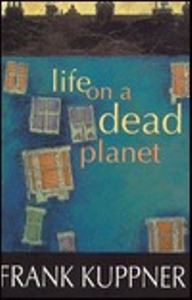
This Scots novel is closer to those vintage American postmodern narratives I love so dear—a sardonic, interrogative third-person narrator describes various nameless characters committing various obliquely delineated acts that question the representation of reality in fiction—than your typical historical yarns about identity, Scottishness and politics. Kuppner’s bad-tempered narrator brings to mind the cranky humour of Sorrentino and Foster Wallace as a clinically depressed young philosophy student. Unfortunately, this writer has a poet’s sensibility, so his quest for the well-turned phrase supplants the lightly metafictional frolics and humour that kept me more interested than the baffling manoeuvrings of whatever whoever on the page is doing . . . if he’s (she’s) doing something at all. (Whatever something means. Whatever means means). A muddled fuddle worth the struggle.

4. Harry Mathews — The Human Country: New & Collected Stories

The other reviews here sum up my opinion on these stories—a few pearls mixed with opaque, impenetrable rocks written largely for Michael Silverblatt. ‘Country Cooking’ is a notable standout: a perfect spoof of haute cuisine recipes. ‘Clocking the World on Cue’ is an insanely clever piece of Oulipo showboating where each sentence clocks up the mathematical values of any roman numeral letters in sentences (i.e. m, x, i) so that each adds up to 2001. Mathews’s writing is extremely stylish and linguistically impossible—he makes no concessions for the reader unprepared to participate in his games. Sadly, if he doesn’t throw the reader a bone, she won’t be that interested in playing. I had this problem with his novels too. The stories in the section ‘Calibrations of Latitude’ were among my favourite. The ‘American Experiences’ I found for the most part too advanced. My last Mathews book? Probably.

5. Wallace Markfield — Teitlebaum’s Window

Wallace Markfield is another voice howling from the void—the void of unloved unread unappreciated now-dead experimental fiction writers too cool for even the postmodern crowd. This novel is a collage of elements: each chapter opens with a list of scenes, kvetchings or moments from the 1930s Jewish Brooklyn neighbourhood the book depicts. Simon Sloan is at the centre of the piece and his story is told in intermittent chapters consisting of diary entries, letters, college notes and extended dialogue-packed pages. The chapters in between cover his family, especially his ultra-Jewish father whose good humour gives way to moments of violent son-hating misanthropy that explode from the patchwork of niche jokes, wordplays and Yiddish terms of disapproval. Simon’s early days with his filthy friends recounting sex stories about their parents provides many chuckles, and the later parts with his various Marxist, insane, anti-Marxist suitors as he shimmies up the social ladder are also written with relentless comic imagination. Not all the chapters lend themselves to the addictive pleasure-filled aspect of the Simon pieces, but the novel delivers an original suckerpunch of howling tittering Jewishness regardless.

6. Agnes Owens — For the Love of Willie

Colin Pie here. MJ Nicholls has ordered me to apologise on his behalf for the diminished reading activity among his team of highly skilled and unpaid book goblins this month. This is due in part to the unveiling of three affiliated MJ Nicholls subsidiaries: 1) The MJ Nicholls Association for Patronising Lectures on Experimental Fiction (TMJAPLEF). 2) The MJ Nicholls Department for Digressive Comedic Reviews with Little Relevant Content (TMJNDDCRLRC). 3) The MJ Nicholls House for Self-Referential Whimsy Over Substantial Textual Analysis (TMJNHSRWSTA). I have been made the CEO of the MJ Nicholls Centre for Tiresome Acronym Jokes That Aren’t Jokes (MJCTAJTAJ), which incorporates TMJNHSRWSTA.

1. Distracting Relevance. This is a novel by Agnes Owens, a retired cleaner from Milngavie, in which teenage girl Polly gets knocked up by a sleazy shop owner. A second narrative told fifty-or-so years in the future describes Polly’s attempts to write her life story in a hospital ward after a lifetime of serious mental health problems. Lean and unflinching prose from this surprising and consistently overlooked talent. This text is part of the MJ Nicholls Repository for Unknown Scottish Fiction of Little Interest to the Predominantly American Goodreads Demographic (no acronym available).

2. More About Colin Pie. I confess, I am looking to establish The Colin Pie Association for More Reviews About Colin Pie (TCPMRACP) within the MJ Nicholls & Affiliated Pseudonyms Reading Experience (TMJNAAPRE). I have secured funding from the Manny Rayner Institute for Technical Reviews About Chess No-one Reads (MRITRCNR) and the Paul Bryant Centre for Short Parodies of Unread Books for Fifty or More Easy Likes (PBSPUBFMEL) and the TCPMRACP should be in operation within four years. (If we secure planning permission from Jeff Daly first. I hear he can be bought).

3. And Finally. Who needs MJ Nicholls anyway? His days are numbered in the current economic climate. When all publishing stops in 2013 and we revert to wartime measures of rationing and water conservation in a desperate attempt to stimulate growth (as opposed to shutting down off-shore tax havens for billionaires), all literature will be an irrelevance. All that will remain are the reviewers pouring over the last two millennia of literature in witty and amusing ways, as predicted in this prophetic review. The Day of the Reviewers is coming—and I intend to cash in! Come get a piece of the Colin.

P.S. This is being performed at the Edinburgh Fringe this year.

7. Kathy Acker — Blood and Guts in High School

This book was released in 1978, making “post-punk feminism” an apposite description. Not that punk had stopped in 1978 but post-punk bands were already evolving the two-chord assault of the punk sound into something better (or in the case of Howard Devoto or Jonathan Richman before punk even happened). So this hysterical novel chimes perfectly with the nascent post-punk art explosion coming from NY in the late seventies, entwining it with this glorious period of art-school pretention and irredeemable poetry. The novel uses typographical attack weapons (enormous fonts! childish scribblings! decorative borders!) to tell its horrible story of an abused feminine receptacle desperate to free herself from the whoredom of men. Along the way, she meets Genet who also proves himself to be a prick. Tsk. Something of a response to William H. Gass’s potentially sexist typographical funhouse, Willie Masters’ Lonesome Wife, perhaps? A perverse relic: mainly dark and funny now, too hysterical to make any longstanding feminist impact. I hate the cover. I feel I’m supposed to.

8. Anne Brontë — The Tenant of Wildfell Hall

Tackling Brontëism #2

The second novel Anne wrote before she caught pulmonary tuberculosis shortly after her 29th birthday. Certainly not something on those 100 Things To Do Before You’re 30 Lists. 1) Paragliding. 2) Kayaking. 3) Catch pulmonary TB and die. See? Good. The problem with those lists is they presuppose readers like the outdoors and have a private income of some three zillion units. Far better the lists have simpler aims for us mortals: 1) Eat a probiotic yoghurt. 2) Bumslide down a banister. 3) Help drywall your father’s shed. 4) Post an actual letter. 5) Touch something with a DANGER OF DEATH sign. That sort of thing.

Anyway. Anne’s second novel shows her evolving considerably as a prose composer—if not in terms of style or structure, certainly in terms of content and ideas. The structure is peculiar—the first 100pp concern Gilbert Markham’s attempts to chat up a reclusive new tenant at the titular Hall, before switching to the letters of said tenant, Helen Graham/Huntingdon. This is what we MFA graduates call a fucking huge narrative lurch, but the story becomes far more interesting as Helen’s narrative voice is the strongest (Gilbert doesn’t quite convince as a man) and more rife with intrigue, struggle and heartbreak, etc.

She marries Arthur Huntington despite her supposed intelligence, an alcoholic in remission whose condition returns during his frequent trips to the dens of London. He soon morphs into a monster and Helen’s patience is tested to snapping point, forcing her to flee her fallen hubby. The novel is one of the strongest (and earliest) depictions of the human rights abuses the marriage laws of the period were capable of encouraging . . . by marrying a man the woman was entitled to hand everything she owned to the husband and become an obedient slave-creature. The prose meekly screams at this pathetic injustice and rightly so.

The writing style is extremely circumlocutious in places and only very patient, bedridden readers will want to wade through the long monologues and nature descriptions . . . I mean this in comparison with other novels of the period, so heed that warning. The structure works surprisingly well as the narrative is handed back to Gilbert, although the clumsy recourse to letters to keep the story going makes the last quarter a painful flop technically speaking . . . plot-wise, I was bursting to know how things turned out for the long-suffering Helen. Excellent work. First Brontë has passed the test. Next: Charley.

Thursday, 10 May 2012

Luka on the Second Floor


Dear Luka,

You live on the second floor. You live upstairs from me. Yes, I think you’ve seen me before. I am Charles Harold Ottridge, I live on the first floor. Frankly Ms. Luka, I am fed up with the noise coming from your apartment. I have tried repeatedly to contact you in the evenings, but when I knock on your door, you or your husband refuse to answer. It is not my concern whether you choose to participate in domestic violence, but I would appreciate if you would do it with less volume, as some of us like to relax in the evenings after a hard day’s work.

Yours,

Charles

*

Dear Charles

I received your letter with concern this morning. I am sorry about the noise coming from our apartment, but I assure you it is not domestic violence. I am a very clumsy person and I often trip on stairs and bash my face on walls on so on. This often happens in the evenings and so the noises you hear are me having my accidents. Please don’t report these noises to the landlord, we are quiet people really and do not want to cause a fuss.

Yours,

Luka

*

Dear Luka,

Thank you for your rather clumsy reply to my original letter. As I said, what goes on in your apartment is not my concern but I would ask that you keep these “accidents” to a minimum in the evenings or I will be forced to speak to the landlord about the noise.

Yours,

Charles

*

Dear Charles

I received your letter and I wanted to know why you are so unhappy that you have to make threats to me. I told you I will try to keep my accidents to a minimum so why do you have to threaten me? I want to know why you are such an unhappy man that you would write these things.

Yours,

Luka

*

Dear Luka,

I can assure you I am perfectly content, providing the volume of noise decreases in your apartment.

Charles

*

Dear Charles,

Men like you make good graves.

Luka

P.S. My very long and very miserable and squirmily playful story Maybe Tomorrow is up at Blue Lake Review.

Saturday, 5 May 2012

What Pooh Said to Dante

Manny Rayner is a popular reviewer on Goodreads, where I waste 90% of my time. This is a review of his book, What Pooh Might Have Said to Dante and Other Futile Speculations.

This is an entirely new thing—a book of (and about) paratexts. A book about the chatter of books: the reviews, commentaries, responses around texts. And here I am poised to contribute to the paratexts around this book of paratexts. Is a revolution stirring within these pages? Or is this some sinister catalogue of subliminal advertising filtered from the digital culture into our precious print-space? Let us explore.

I am reviewing a book of book reviews. In these book reviews, the reviewer, Manny Rayner—author of New York Times Bestsmellers Putting Lubricants into Speech Recognition: The Vulvar Grammar Compiler and The Smokin’ Language Translator—pronounces on various categories of literature, from children’s classics to pop trash to dearly beloved classics. At face value, this is merely a compilation of erudite reviews from a man committed to popularising his responses to literature online. But look deeper.

You are being sucked into a subtle matrix, what the postmodernists call a “recursive loop,” where a narrative finds itself trapped in endless hall of mirrors. As you read, you begin to notice how Manny’s reviews expand outside the texts being discussed—sometimes digressing from the original texts completely, like a new bacteria evolving from its host. Your response to his responses will leave you hungry for responses to your response to his responses and so on like some perpetual conga line of literary sodomy. Soon you will find yourself trapped in this Mannyworld where all that matters are the carefully worded responses to books. So: is this book is the end of books?

Flash forward four years from now, where Manny’s review of the latest Philip Roth is the number one bestseller on Amazon. Philip Roth hasn’t written the book but Manny knows the content of this nonbook from the preceding Philip Roths—yenta and fucking—and can deliver a withering 200-word slapdown in his usual amiable style, safe from mailbombs since no once can tell if he’s American, French, British or Norwegian. The discourse has eaten the discoursed. This is when the authors will have their revenge.

To knock Manny, karen, Bryant and co from their perches the authors write perfect lampoons of their reviews and these reviews themselves become the most popular, returning the authors to their previous place as online nonentities. But nothing can stop the recursive loop except the passing of time—the authors whose texts were parodied will die out, along with the reviewers—there remains no new literary material to write about outside the reviews, all literature has slid out of print. The future is reviews about nothing. The future is an endless oneupmanship to see who can write the wittiest, most popular 200-word capsule review on fuck-all. This is Manny’s fault.

But what about the present? Even if you dislike his brand of smarter-than-thou humour, you have to admit Manny is an important ventricle behind Goodreads (the one linking the brain to the heart, say, or to the bowels). Who else would read Twilight, Harry Potter and Angels & Demons solely for the chance to write snarky, erudite, silly, reviews? Or to impart complex info about chess, linguistics or French grammar?

Sure, he has his flaws: he won’t read your recommendations unless they were already on his reading list. He won’t read works in translation so he won’t read anything in the vast canon of European (except France and Norway), South American or Asian literature. He rarely dips his toe into American postmodernism (or anything from the Dalkey Archive) and always posts reviews of obscure things he read in his younger days. As for this volume, I am partial to the parodies—selections include Beckett, Orwell, Nabokov, Milton, Proust and Austen and various mash-ups. And the dialogues raised the most titters too. So for now, sip slowly on the volume, but watch out for that recursive loop. It cometh. 

Monday, 30 April 2012

My Month in Books, Part Two (April)


14. Chris Ware — The Acme Novelty Library #20

Yes, this one was spectacular. I don’t know anything about the Acme Library except I missed the preceding nineteen novels, but the life and death of Jordan Lint was beautifully designed. A truly pioneering way to tell a simple story, leagues ahead in the originality and wittiness stakes. Like a dream that becomes a nightmare, beaming life back at us in all its horrible inevitability. I read portions of this in The Book of Other People, so completing the piece a year later was a prolonged pleasure for me. Chris Ware is not readily available in the UK, so I lament the fact I might never read another entry in his library. Sad face. Mommy!

15. Nicola Barker — Darkmans

I want to review Darkmans but I should be researching UK agents so I can submit my own novel to snotty Islington ministers’ daughters—the sort who fall down drooling at The Kite Runner or some such oxplop—in the hope that one day I can write a tongue-in-cheek five-star review of my own novel on Goodreads then re-post a series of self-promoting updates every four minutes for everyone to ignore, then fight off a caustically withering slapdown from Mr. Bryant with four pages of unpunctuated vitriol, made worse by a pompous author shot of me, unshaven, in my James Joyce glasses, oozing hard-won wisdom.

I wonder if Nicola Barker ever spends the afternoon writing a three-hundred word review for Goodreads under a pseudonym rather than delivering the next twelve pages of her latest opus to her publisher. I doubt it. See, this is my problem. I adore writing but I love reading more more more. Then I love sharing my passions on this worldwide book orgy. I flinch—no, I wince, an appropriate word for this novel—at writers who prefer writing to reading. These people are usually lawyers who decide to take up writing on the side, transcribing the minutiae of their cases for their mass market drivel, while earning £26K getting a rapist off on a technicality. Where is this going? Nowhere.

I have stuff to do. Needless to say, this book is her second masterpiece, next to Wide Open, which I still think (sorry deleted member Iain) is her best book. This one is compelling and witty, bursting with energy, comedy, heartbreak and mystery, but shows its flaws all too easily. The least nagging of these is an unhealthy use of the verb to wince—the characters are wincing all over the place, why not blench, cringe, flinch, quail, recoil, or squinch, Nicola? Anyway, fabulous book. Chris’s review and Drew’s review are better. I’m off to work, by which I mean linger on Goodreads for another hour. Curse this place!

16. Robert Alan Jamieson — A Day at the Office

An unloved and neglected experimental novel the Dalkey Archive should clamour to republish at once. An unnamed man in an office describes the lives of three intersecting characters, punctuating his narratives with free verse poems and musings much like a Scots Book of Disquiet. Ray is a dole-scrounging drug pusher waiting for something to happen that doesn’t involve employment, Helen works in a casino and recently split from her husband following a violent attack, and Duncan owns an antique shop and deals on the side too. As in Nicola Barker’s Darkmans, the narratives are hiccupped with subscript interruptions from the characters’ heads, as though the subjects can hear the narration and want to add their own snarky or poetic comments. The technique works since it places us directly into their minds without recourse to ‘he thought’ or ‘she wondered’ and brings us as to close as we can be to these pedestrian dreamers (although still largely within the narrator’s literary voice). In the hands of Ali Smith this novel might have built to a tragic or moving climax involving roulette wheels gone mad, but this author is concerned only with capturing an ordinary, melancholy snapshot of life in a very inventive and underappreciated way. One review on Goodreads (mine) and another ‘to-read’ is not a fair fate for this excellent book. Curse this life!

17. Gore Vidal — Kalki

I write this review on a cordless laptop at my girlfriend’s cabin the Highlands, the rain lashing against my cheek (I’m half indoors half out), the wind howling against my thigh (my other thigh is howl-proof). I lie. I write this in a cosy bed on a cordless laptop, the only danger being a rampaging bull butting the double-glazed windows with his horns of evil, then gouging my pretty face with said horns. All this is padding. I apologise. Sometimes I have so little so say about all these wonderful books I read, I despair about my tenure on this site. Anyway. Another Gore Vidal novel. This one is about the re-embodiment of Vishnu in a Southern US drugpusher, who summarily brings about a lotus-based global apocalypse. That’s all I need to say: sells the book pretty well, don’t you think? Vidal’s prose is sumptuously readable, classily satirical and ineffably wry. Read something by Gore Vidal. He deserves new readers. This review is pants. Sorry.

18. Robert Alan Jamieson — Soor Hearts

Jamieson’s output is largely entwined with the Shetland Isles, where he was raised in the wee port of Sandness before setting up base in Edinburgh. His debut novel is a historical melodrama that mimics the oral storytelling tradition of Shetland, although with a deeper psychological and descriptive range than a Nordic saga. Magnus (see?) has returned to Mirkwick after the alleged murder of his friend in a bar brawl, sparking ire from the local God-fearing townsfolk eager to see the flame-haired murderer swing for his sins. Part historical commentary, part murder mystery, part psychological thriller, this brief novel boasts some impressively poetic prose, despite the familiar plotline, and plants the foundations for his later novel, Da Haapie Laand. The Shetlandic dialect is interesting when transliterated—sounding more Jamaican than Scots—but Jamieson waters down the speech to keep things readable. His best novel, however, is the magically postmodern A Day at the Office.

19. Nicola Barker — Love Your Enemies

This is a stronger collection than Heading Inland, notable for the outstanding novelette ‘John’s Box,’ where a terminally ill man constructs his own coffin in a Warholian pop art stylee, and ‘Dual Balls,’ where a prim schoolteacher takes vibrating testicle apparatus into class to honour her friend and subsequently orgasms before the headmistress. ‘A Necessary Truth’ and ‘Symbiosis: Class Cestoda’ deal with oppressive domestic lives where women find liberation in odd ways: the former through a cold caller teaching philosophy, the latter through a tapeworm living in her stomach. Some stories are light, disposable whimsy, but in the appealing Barkerish mode. Note for completists: the stories in Three Button Trick compiles material from this collection and Heading Inland with no new stuff—it’s better to read the two distinct collections.

20. Adrienne Rich — Diving into the Wreck: Poems 1971-72

Exasperating and bleak poetry cycles about gender struggle and body politics. Not my usual parvenu, but I appreciated hearing this voice. On the bus.

21. Charles Burns — Black Hole

I was caught up in that lamentable period of American cinema (has it stopped?) where implausibly attractive actors in their late twenties pretend to be nubile teenage virgins hiding from serial killers or participating in leery innuendo-laden unfunny antics with ex-sitcom stars. Oddly enough this phenomenon was helped along by Wes Craven’s Scream, a film that satirised all the clichés of a genre it single-handedly repopularised—the layers of irony gradually falling away until the reliably bankable properties of cheap sexism and hack writing were fully reinstated at the top of the box office. Where they belong.

This collected comic strip dates form the early nineties and beyond so can be excused for leaping on any sexy-teenagers-and-the-supernatural bandwagons that have popped up in recent times. My central problem with Black Hole is my weariness at having sexy American teenage brats as protagonists, especially those undergoing coming-of-age experiences with an added macabre aspect. Especially if the sympathetic characters are overly sexy teenagers drawn to look like actors in their twenties. I have no time for this shit. The teenagers in American films resemble no teenagers I have ever met in my short life. They might as well be bepimpled alien creatures with tails and horny schnozzles.

Still, despite this bulging bias, I found Black Hole compelling for its structural cleverness, its striking plunder of the dark imagination, the uneasy union of the erotic and perverse. I still resented how the sexy chick escaped with only a partial tear down her spine, and distanced herself snootily from her fellow freaks, but those are my own armchair issues. (I suppose it makes a change to have a graphic novel where the nerd isn’t the hero). As for the dialogue, it clearly escaped from a teen movie of some description, but the drawings redeemed the whole shebang. Hopefully no movie will ever be attempted.

Edit, following admonishment from friend:

I have been informed by an absolutely furious friend this GN has more in common with fifties horror B-movies and ye olde pulp comics than the nineties teen-slasher parodies mentioned above. There also isn’t really a hero (even though the sideburns guy is sort of a hero), so apologies for that misleading piece of shoddy reviewage. Also, “reviewage” isn’t really a word, and only highlights my own desperate ploys for lexical originality in these hastily typed literary judgements. And finally, the forthcoming film should be written/directed by David Cronenberg or someone of his ilk, not written by Neil Gaiman and directed by some other geezer. I apologise for the distress this misinformation has caused. P.S. I also have issues with sexy beauty-queen freaks. Thanks.

22. John Updike — Rabbit is Rich

Glib Capsule Review:

Rabbit cracks wise. Rabbit talks about cars. Rabbit scrutinises female anatomy. Rabbit bawls out no-good lowlife son. Rabbit’s actions receive entirely undeserved Harvard-strength descriptive torrent. Rabbit screws his wife. Rabbit fantasises about screwing his friend’s young wife. Rabbit makes racist or sexist remark. Rabbit thinks about daughter or dead Skeeter. Rabbit goes into four/five-page thought-stream with no paragraph breaks. Rabbit wants very much to have sexual intercourse with another lady. Rabbit isn’t really rich. Randomise these sentences for 423pp, that’s Rabbit is Rich.

Additional:

The third number in Updike’s tetralogy is a deliberately overweight, exhausting mess, centred almost entirely on Rabbit’s misadventures in opulence. For me, this is the novel’s greatest flaw: in Rabbit, Run, Updike wrote so eloquently from several POVs, notably from Janice’s, but here, aside from one or two swings to Nelson’s (Rabbit’s son) perspective, we’re trapped in Rabbit’s head for the long haul. Updike’s prose has gotten saggier and baggier since the 1950s—no writer but Nabokov can really sustain hyper-stylised prose over a 423pp novel (Ada being a bad example), so the marshy swamps of description tend to blur into one big OH THAT’S NICE, BUT SO WHAT? As for this comment that Rabbit is Rich is where Updike expanded upon the technical innovations in Ulysses—balls! Updike wrote breathtaking stream-of-consciousness prose in the first book, using Joycean borrowings to devastating effect. This book contains one clumsy attempt at thought-stream prose early on, replacing this with comma-drenched clumps of dullness for the duration. If Updike’s only intention was to write a supersize novel to reflect Rabbit’s distending gut and bank account, this is disappointing. His reluctance to abandon his hero’s relentless sexual musings to explore the family in greater depth is also disappointing. I wasn’t expecting change in the characters—we know they’ll remain appalling wretches until the final breath—but I needed more originality in the telling. Apart from these gripes, I lapped up the story OK.

23. Laurence Sterne — A Sentimental Journey

For those curious as to Sterne’s “other thing” besides Tristram Shandy, let me make it clear: no, this is not another spearheading postmodern masterpiece. This is a vicaresque (ha—see what I did there?) travelogue narrated by the curious Yorick, a man of questionable virtue. The chapters are bitesize but thin-in-content, making it pleasant to read if not altogether interesting—a few semi-comic mishaps befall the narrator, and the Tobias Smollett parodies are amusing too. The novel does lean towards the sentimental—sketches where the reader is asked to extend their pity towards suffering French beggars and so on. Nothing here disproves my theory that English Literature kicks into gear in the readability stakes post-1799 (yes, with exceptions—keep yer hair on). Also somewhat snagworthy are the frequent French phrases used—I had to keep thumbing back to the endnotes. Nice cameo from Toby Shandy, however. And a perfectly charming read otherwise. But not essential.

24. Rodge Glass — Alasdair Gray: A Secretary’s Biography

Rodge Glass was a man who knew what he wanted. What he wanted was to be Alasdair Gray’s indentured servant for life. After a spell at Gray’s short-lived CW classes in Glasgow, he attached himself umbilically to his mentor/idol and hasn’t let go since. This, naturally, has helped him launch his career as a novelist and has embroiled him in whatever “scene” happens to be ongoing at the moment (such “scenes” usually comprise people from certain CW groups or those who fortuitously attend certain literary events, rather than an uprising of fresh unstoppable literary talent). But despite this cynical manoeuvring (which Glass admits is a nice side-effect of his devotion), Glass’s biography is a nuts-and-bolts account of the fat asthmatic Glasgow pedestrian’s life from 0-74 (Gray is 77 now), interspersed with snippets from Glass’s “diaries” which expand upon the story with additional anecdotal information and personal accounts of their professional relationship. The overall portrait is of an explosively creative talent mostly in disarray—he was never able to commit himself to one discipline entirely, and his frustration at this is shown throughout his “obscure” years—and a largely affectionate study of his career and works. Personal info is limited (at the author’s behest) to Gray’s disastrous first marriage and his happy final marriage, and no info is given about Gray’s success as a father at all. So it’s mainly a career retrospective with the odd sparkle of revealing information (among them Gray’s habit of urinating in the sink in front of students in his university office), and succeeds at unravelling some of the self-mythologizing and deception behind the man. Mostly he was broke, unhappy and unable to stop working. (And crap at sex). Nowadays he’s broke, unable to stop, but happy. (Still crap at sex). You can’t ask for more in life, especially if you’re a Scottish artist.

25. Anne Brontë — Agnes Grey

Tackling Brontëism #1

Firstly, let’s diagnose this phenomenon. I first encountered Brontëism—definable as a slavish devotion to every word the sisters put to parchment—at university. I encountered the syndrome in American students who had spent their teens reading comedies of manners and upmarket romance novels and found in the Brontës a vicarious way to eke out their own desires for windswept romances in huge drawing rooms. Then I met British students whose puppy love for Wuthering Heights or Jane Eyre made me upchuck several weeks’ worth of pasta. So I cynically diagnosed the Brontë books as über-romance novels female readers held up as examples of the best sort of love possible in life—the love they would have if they could engineer their environment, to which all romantic relationships should aspire. Or versions of those moral-dilemma novels so popular at bookclubs and airports. It frustrated me. It was like having a particular area of literary history cordoned off to me. That I did not like.

Only problem was, I wouldn’t read the books. Now, however, I am reading the books. So this series of reviews is my attempt to understand the phenomenon of the Brontës so I can legitimately express discontent at their contemporary omnipresence, or proclaim my undying love too.

This novel is the first one by “the quiet one” Anne Brontë and describes her experiences as a governess in the homes of several brats. The first preconception smashed is that all Brontë novels are concerned with aristocratic characters: in this novel Agnes is from a lower middle-class family and volunteers to teach rich brats to help pay off her father’s debts. The chapters read like a handbook for being a patient and docile governess who has God on her side, with occasional turns of mannered humour and moments of affecting melodrama. The short chapters make the frequently dreary moments of micro-attention-to-detail regarding modes of deportment and social graces (that bog down so many novels of this period), more bearable. All in all, mildly entertaining. A lesser work from the lesser sister necessary for my experiment. More soon.

26. Gore Vidal — The City and the Pillar

So few of my GR friends have read this and other Gore Vidal classics, I have to pose the question: where does Vidal stand in the American pantheon? Do his historical novels about the Republic turn readers off for their political content and supposedly dry writing? Does his late career as polemicist and hired mouthpiece present him as a dusty old eminence, far too close to the rich and famous to have any worth as an artist of substance? Can someone born into a wealthy political family, close to JFK and Al Gore, win admiration as a novelist? Answers please. More people should read his eccentric novels—clearly Gore takes more risks than many of his American contemporaries, coming from a refreshingly bisexual perspective, not the rampantly hetero angle of Mailer and Updike. This novel is an excellent early shocker about a teenager’s nascent homosexuality, and probably still provides solace to readers today, despite its 1940s barcode. The writing is concise, unshowy and closely renders the experience in a believable, painful way. I love Vidal for his completely unpretentious, direct, anarchic, sublimely erudite books! Why don’t Americans?

27. Alasdair Gray — The Ends of Our Tethers

Gray is constantly surprising me—whenever I consign him to the dustbin of mediocrity, he returns with a superb collection of short fiction. After a seven-year absence (where he worked as a writing professor in Glasgow), he returned refreshed with thirteen tales about senility, creativity and politics. ‘No Bluebeard’ is the longest: an account of the narrator’s three marriages based on Gray’s shaky relationship history and his marriage to a steely Scandinavian who shared her name with Olympic Danish swimmer Inge Sorensen. Boasts the most awkward use of the C word in a piece of fiction (outside Updike). Also notable is ‘Aiblins’ about a deranged poet who tries blackmailing his old tutor into getting his work published through braggart posing. ‘Job’s Skin Game’ is the best story about recurring eczema you’re likely to read (outside Updike) and brims with scabby mischief. The other pieces here are brief, memorable, bittersweet and perfect. Gray is little grey deity.

Sunday, 29 April 2012

My Month in Books, Part One (April)

1. Kurt Vonnegut — Cat’s Cradle

The best way to cure Reader’s Block is to reread authors whose works induce chest pains of happiness in one’s . . . chest, so I did this with Mr. Vonnegut this afternoon. Sadly, upon rereading Cat’s Cradle, which I first tackled in 2007 at the summit of Arthur’s Seat as a love-drunk twenty-year-old starting to lick the world’s honeyest creases after a period of long-term depression, I was more disappointed than delighted. I suspect this book is read largely in one’s teens when confronting the vast nothingness of space and wondering where religion and civilisation and love and death fit into this premise. Five years later, some of these things have slid into place or slipped to the back of one’s mind to be replaced with short-assured leases on two-bedroom flats and where to purchase a decent chapatti bread for under five pounds. And so on. But this novel is a structural mess, shambolic and meandering and at times a little laboured. Mostly, however, Vonnegut is at his satirical peak and some of his finest creations and enduring ideas are explored in the novel, among them Bokononism and ice-nine and the weary reticence of a cynical humanist who loves people so much he can’t stand their company. A masterpiece at a certain time in one’s life. As a novel, patchy.

2. Craig Thompson — Blankets

I notice it’s been almost a whole year since I read my first graphic novel (Asterios Polyp on April 21 2011), so it’s fair to say I haven’t exactly immersed myself in the genre. Heh heh. My second graphic novel was an arbitrary grab at the library and was one of the few non-superhero-based entries on the shelves. Or perhaps the only non-superhero entry would be more accurate. What is with these people? You can’t be Batman, and drawing a superhero version of Batman will not bring you closer to that dream, m’kay? For Cheeses sake! (Credit to Mike for that ejaculation). This multi-award-winning piece is an autobiographical look at life in the Bible belt, with poor Craig wearing the trousers of faith many unfortunate Wisconsinians had to wear in their God-fearing towns circa the early 1990s. The romance aspect is purpler than a beetroot factory, but believable, in places. I liked the depiction of his girlfriend’s family, that seemed a more interesting plot to me, and the religious tension contrasted well with the permafrost of failed love. Nice work. I look forward to my third in April 2013. What will that be, ink lovers?

3. Spike Milligan — Hidden Words: Collected Poems

These poems are moving and silly but always deadly serious. Spike Milligan is at his poetic best in the short form, thus:

Dreams I

Dripping dreams
   of life away
Dreaming drips
   night and day
Do you hear the
   waters lap?
How many dreams
   left in the tap?

Untitled

Nothing changes
Nothing does
It ends up like
It always was
It always will
Because, because

4. Gore Vidal — Duluth

Another of Gore’s raucous entertainments. This anarchic semi-satirical, semi-surreal novel flirts with the metafictional (two decades after its heyday) and flings about a dozen different plots at the reader that all intersect in sometimes random and sometimes logical ways. I gave up looking for the clever connective tissue between the elements fifty pages in, possibly because there isn’t any. Summarising the novel would also be a waste of my time, since the storylines all take various absurdist detours into fictional reality, political satire, edgy rape humour (something uncommon these days—wonder why), and an exhausting display of imaginative barbs that relent only when the book staggers to its bug apocalypse climax. This is the sort of book most authors would write if they had the status to publish anything like Mr. Vidal—a completely berserk detour of the imagination unfiltered by such trivialities as audiences, readers, or marketing strategies. Completely loco and hilarious.

5. André Gide — Uriel’s Voyage

I don’t know why Thomas Pynchon is on the cover.

6. Alison Bechdel — Fun Home: A Family Tragicomic

Shatters all my preconceptions of the graphic novel, reassures me of the form’s capacity for dense literally allusiveness, intellectual analysis and philosophical ponderings. Brilliant. The writer/artist was raised in a marvellously retro setting—a refurbished mansion kitted out like a Russian estate, with a snobbish bookworm for a father and an upper-class actress manqué for a mother (both of whom taught high-school English). The story attempts grand parallels between the author and her father, drawing comparisons with Fitzgerald, Proust and Joyce, and overegging the Greek myth a little, but also zips along with humour, eccentricity and a generation of repressed homosexuality. Mega good. Even better is Oriana’s review. Read that instead. If my graphic novel reviews seem short it’s because I’m still learning how to critique the artwork: anyone who can draw a circle sans compass is a genius to me.

7. Marjane Satrapi — Chicken With Plums
I saw the movie of Satrapi’s Persepolis and found it deeply irritating. But, being a pioneer in the graphic novel form—hell, a lone populiser of the form—I had to read something by her. This graphic novella (must I start a separate shelf for shorter graphic works?) is a melancholy folktale about a poor musician whose wife snaps his tar (like a sitar) in two. Finding no replacement for his prize instrument, he takes to his bed to die, where he reflects on his thwarted life—marrying the wrong woman, neglecting his only son, but mainly losing his tar. The question raised: if all great art is borne out of misery, who needs great art? Interesting A.L. Kennedy article about this in The Guardian recently. Anyway: very gloomy and very good. I will read Persepolis if someone twists both my arms.

8. Posy Simmonds — Tamara Drewe

I am on a graphic novel kick this weekend, but don’t worry, I have a week of Grossmith, Dostoevksy and Nicola Barker lined up, so normal service will be resumed. This one is known mostly in the UK and was serialised in The Guardian, then turned into a movie with the brilliant Roger Allam and Tamsin Greig. Being a parochial, very English piece gives it little international appeal but it is spiky and witty in a BBC Radio 4 sort of way. The movie irons out several crinkles in the original, such as the fate of the arrogant rock drummer, Jody’s death by huffing computer polish, and bringing about a happier ending for the bearded American. Very unHardylike, perhaps, but I love my underdogs to win. The plot concerns a writer’s retreat in the English countrywide, probably somewhere like Devon, and the various adulterous hijinks that take place after a local beauty returns with her crooked nose fixed to stir up trouble. Lots of fun. See the movie if you can.

9. Charles J. Shields — So it Goes: Kurt Vonnegut, A Life

A cursory glance at Charles J. Shields’s bibliography shows him to have authored a string of hack profiles ranging from Saddam Hussein to J.K. Rowling, plus books on sexual disorders, Uruguay and Vladimir Putin. Clearly this is the man to write the first full-length biography of bouffant satirical demigod Kurt Vonnegut. CLEARLY. Like him or not, he will remain, for time immemorial, the first and only man to have authority from The Master to write a full-length bio (or, at least, a vague thumbs-up from a doddery moribund man who he spoke to twice). But here we are, here it is, so it goes, and so on. Shields has written an extremely workmanlike bio, forgoing any textual trickery or temporal twiddling to present a birth-to-death portrait of the artist as a cranky firecracker, partial Mormon, and counterculture Baal. It zips along nicely. Shields’s own hack background clearly mirrors Vonnegut’s career chasing moolah in the slicks, so any protests on that front are churlish. CHURLISH. He describes well the maelstrom of family in Kurt’s life, and the agents, friends, extra kids and sparring partners.

But there’s one person missing from this bio: Kurt Vonnegut. I see only a shadow walking through these pages. I see his first wife Jane come to life brilliantly—an utterly devoted charmer who never loses faith in Kurt’s ability to become a great writer, who Kurt breezily betrays once his career picks up traction. His children swirl in and out the novel, tormented and amused at this cartoon grump lurking in his office doorway trying to write a novel with very short chapters. This isn’t necessarily a criticism—Kurt was deeply insecure and lacking identity. His shrewd businessman’s instincts dominated much of his writing life—the famous perm and moustache was cultivated to impress his readership following Slaughterhouse-Five’s huge success. His advice as a writing teacher was geared towards selling stories for vanishing magazine markets. He clearly relished his financial freedom after a long decade grafting largely for financial success. He was a free enterprise capitalist, not a socialist dreamer.

There are many unpleasant revelations in this book, mostly Kurt’s treatment of women: not impressive. Embarrassing examples abound, including his on-campus sexism and philandering in the sixties, though this is hardly surprising given the middle-aged males dominating the writing courses at the time. Basically, Kurt was an asshole. He acknowledges this many times in interviews and his books. He was an overgrown baby who wanted status and respect as an author, forever insecure about his place in the pantheon. Anyway: none of this matters, really. We have the books. Shields isn’t too hot on the canon, offering slim synopses and capsule summaries where meatier examinations might have been welcome for the devotee. He is also overly harsh about a number of his works, lingering on the critically popular ones. More drooling devotion might have been welcome.

Although meticulously compiled from limited scraps, the book is frustrating since we don’t get a better sense of Vonnegut outside his autobiographical works. Perhaps that’s the point: Kurt lived a Jackson Pollock life, as anarchic and shambling as his novels, and ultimately he was a product of depression-era America, the 30s and 40s, and remained rooted to these beginnings all his life . . . which is hardly a flaw. Learning how typically writerly he was “humanises” the man behind the novels, and does little to change our opinion of his work. His last ten years of life, sadly, were spent with Jill Krementz, whose behaviour towards her eighty-year-old spouse is not what one might term “affectionate.” Kurt really needed Jane in his life in his dotage, the poor sap. So: a solid bio with a throwaway appendix, badly endnoted. 

10. George & Weedon Grossmith — The Diary of a Nobody

11 April

Sat down to write a capsule review of The Diary of a Nobody. Interrupted by a loving thump at the door. It was Mark Nicholls from my review of Italo Calvino’s If on a Winter’s Night a Traveller, a piece of spoof metafiction that ranks as my most liked GR review. I studied my 23-year-old self carefully then looked at my 25-year-old self and noted nothing had changed facially in two years except I was even more handsomely bespectacled. “Would you like to buy a copy of . . . ?” he began, but I’d heard it before. After all, I wrote it. “Finished that novel we started in 2009 yet?” he asked snidely. “Yes! I finished that like a month ago,” I said, triumphantly. Mark Nicholls from 2009 circled the Mark Nicholls from 2012 like a toreador taunting a pacifist bull. “Wow. Speedy Gonzalez. You must be the new Joyce Carol Oates,” he said. I snickered, neglecting to tell him about our vagina transplant.

12 April

I change to the present tense since the review is being written today, contrary to the opening sentence. That’s an example of what we call in the trade “unreliable narration.” Having doubts about writing a spoof diary review, despite having spoofed since my teens. I put on the new Big Sexy Noise album, Trust the Witch. Lydia Lunch appears on my desk and berates me for being a pussywhipped pastyasted whitebred chickenshed motherloving dolescrouging booksucking bitchboy. I tell her that’s far too many dashless hybrid words for a Thursday. She laughs and we have anal and a slice of malt loaf.

13 April

I will change tense, since this day follows the day on which the review was written. The question will arise, however, as to whether the first sentence needed a tense change, seeing it was written yesterday. (Although this isn’t true either—the review was actually written on the Wednesday night with a view to being posted on the Thursday!) I will walk to cupboard, where Dostoevsky’s skin is hanging on a coat hanger, awaiting its body. The doorbell will ring. A fleshy bone arrangement with organs will stand there and say: “Looking for Fyodor’s skin. Is he in?” I will wrinkle my beautiful eyes. “How do you know your skin’s a she?” I will ask. “All women will be brought low beneath the eyes of our Creator!” he will shout. “OK, cool it, come in,” I’ll say. “Ooh, using contractions now, are we?” he’ll ask. I’ll say: “Yup.”

10 April

I started to read The Diary of a Nobody. I thought how clever it might be to write a spoof review, using surreal antics as a contrast to the novel’s straight-laced satire. I realised that would probably be a mistake.

11. Joe Matt — The Poor Bastard

This strip collects Joe Matt’s ‘Peepshow’ series into one self-loathing volume. Seriously, the book groans when you open it, then whines for an hour about how no hot hardbacks find its spine attractive. I wonder if the makers of Channel 4 comedy ‘Peep Show’ took inspiration for their entirely similar entertainment about two selfish losers from the strip? Hmm. Joe Matt’s corny lovable self-parody makes for delightful reading. This really is a one-joke affair of a perpetually selfish dufus exiling himself from the world of girlfriends and regular sex into bedsits and chronic masturbation. Nothing more to be said. Good fun. The aftermath of this pathetically believable behaviour can be found in Spent.

12. Joe Matt — Spent

Joe Matt unleashes a vision of bachelor hell in this graphic novel adaptation of Notes From Underground. It isn’t really, but if there was ever a modern exploration of Dostoevskyian self-loathing and seething hatred for mankind set in a shared house in Canada, it’s this frightening piece. A confession: for a brief period in my teens I exhibited signs of such obsessive masturbatory proclivities (such as storing up sex scenes on VHS for easy midnight use), but this ended when the hormonal eruptions passed. This book explores a lifelong involvement with pornographic movies over actual meaningful relationships. Most men have secret dirties on their hard drives or materials for personal autoerotic use beyond adolescence, and any denial of this fact is a LIE you horny losers, but the question remains: why do men hate themselves so much? And is the answer simply, feebly: because they can’t get women to like them?

Martin Amis said in an interview that it is pointless to feel resentful towards women for refusing to like you, since they can detect a bachelor’s simmering resentment and loneliness a mile off, and will keep as far away as possible, thus trapping the bachelor in his woman-hating fume forever and ever. Or words to that effect. So the easiest option for the nerd is to face the potential humiliation and embarrassment of the dating scene and take each gradual annihilation of confidence and self-respect on the chin. Hmm. Thank God we have Geek2Geek in these enlightened times. This is scabrous self-parody, fun but with worrying ramifications for the author’s sanity. Most of it is probably charming exaggeration.

13. Fyodor Dostoevsky — Winter Notes on Summer Impressions

Fyodor is crotchetiest travel writer of the 19thC and this diary reads like Jeremy Clarkson Goes to France mixed with Karl Marx’s Further Criticisms of the Bourgeois Superstructure: Paris Edition. Two unpublished titles that sum up Fyodor’s critique of the French bourgeoisie, French attitudes and French gentlemen. He hates those damn frogs! Baguette-chomping cheese-eating surrender monkeys, set in their provincial ways! Curse those swine! And don’t get Fyodor started on those Polish Jews, oh-no-no. Louses and vermin and swine and mountebanks and rascals and all those other words that pop up on every second page of Fyodor’s novels. One day the Russian workers will seize control and form a benign Communist state, like the one in China, only better! Fyodor can be quite funny at times, like Jeremy Clarkson, but then the haze clears and the homespun bigotry and xenophobia stand there, hands-on-hips, shaking their little heads. As another reviewer states, Fyodor’s non-fiction was poor—try reading the perennially out-of-print Diary of a Writer for confirmation of that—but if you’re a completist, it’s short and won’t try your patience too much.